
Have you ever wondered how money changes value when it travels across the big ocean? When people look at global finance, they often track the au to inr rate to see how Australian dollars match up against Indian rupees. It is a fascinating topic that affects travelers, students, and families all around the world. Understanding these numbers helps you make smart choices when planning a trip or sending support to loved ones. Let us dive into why these currency values matter so much in our daily lives.
The global economy is always moving like a giant puzzle with shifting pieces. Every single day, foreign exchange markets open up and adjust how much one currency is worth compared to another. When you check an au to inr chart, you are looking at a live snapshot of international trade strength. Money is not just paper or digital numbers; it represents the economic health, goods, and services of an entire country. Learning the basics of currency conversion gives you a handy superpower for decoding financial news.
Table of Contents
Why Exchange Rates Go Up and Down
Currency values never stay in the exact same place for very long. If you watch the au to inr rates over a month, you will notice regular ups and downs. These changes happen because of supply and demand in the global market. When more people want to buy Australian goods or travel there, the currency can strengthen. On the other hand, shifts in inflation or global interest rates can cause the numbers to wobble. It is a continuous dance between buyers and sellers worldwide.
Market sentiment also plays a massive role in how currency values behave. News headlines, political updates, and business reports can change investor confidence in just a few minutes. When people feel positive about a country’s future growth, they invest more money there. This extra activity directly impacts the au to inr relationship. Keeping an eye on these patterns helps everyday people understand why prices for imported goods might suddenly rise or fall.
How to Read Currency Tables Easily
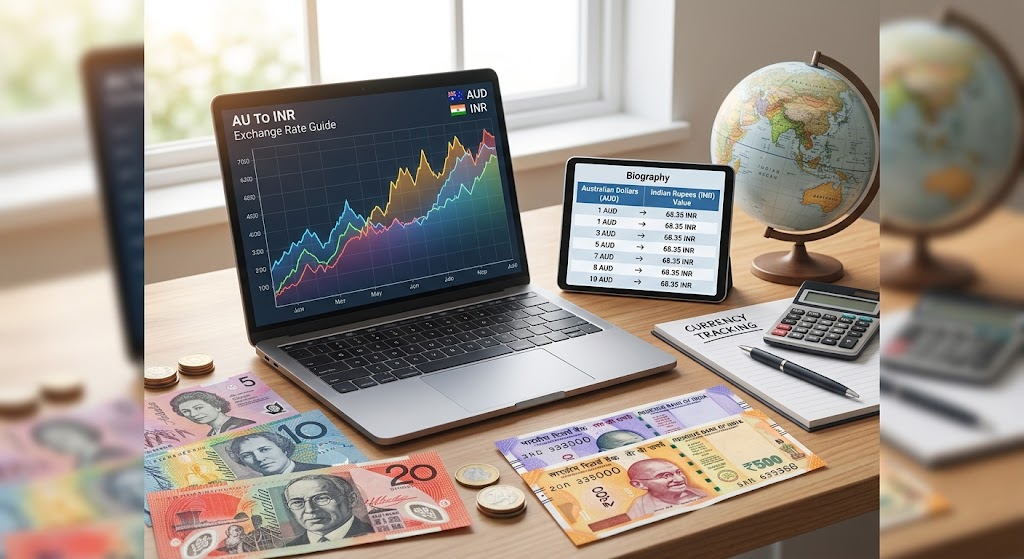
Reading a financial table does not have to feel like solving a complex math puzzle. When you look at an au to inr breakdown table, you will usually see a base unit and a target unit. For example, seeing one Australian dollar translated into Indian rupees gives you a clear multiplier. If the rate is sitting near sixty-eight rupees, it means every single dollar from down under equals that specific amount in India.
Let us break down a quick reference biography table to see how different amounts stack up side by side. This structured view makes crunching numbers simple and fast for anyone curious about international money values.
| Australian Dollars (AUD) | Indian Rupees (INR) Value | General Market Status |
| 1 AUD | 68.35 INR | Base Unit Standard |
| 10 AUD | 683.50 INR | Small Family Purchase |
| 50 AUD | 3,417.50 INR | Dining or Local Travel |
| 100 AUD | 6,835.02 INR | Standard Transfer Amount |
| 500 AUD | 34,175.10 INR | Major Expense Level |
Using a reference table like this helps you estimate costs at a single glance. Whether you are budgeting for a future vacation or checking math homework, having clear figures takes away the guesswork.
The Role of Inflation in Currency Value
Inflation is a big word that simply means things cost more over time. When the cost of everyday items like food and housing goes up, the purchasing power of money goes down. This hidden force has a huge impact on the au to inr balance over long periods. If one nation experiences higher inflation than another, its currency might lose a bit of competitive edge. Central banks work hard to keep inflation steady to protect the wealth of everyday citizens.
Think of inflation like a leaky bucket holding water. If leaks spring out too fast, the bucket loses its contents quickly unless you keep filling it up. Economists monitor these leaks closely to predict where the au to inr rate might head next month or next year. By understanding inflation, you can better grasp why a currency’s purchasing power changes inside supermarkets and retail stores globally.
Planning Finances Around Market Shifts
Smart financial planning requires keeping an eye on economic trends before making big moves. If you need to manage funds across borders, timing can make a noticeable difference in your total budget. People tracking the au to inr movements often look for stable windows to handle their tasks. Rushing into financial choices without checking current data can lead to missed opportunities or unexpected extra costs.
Patience is a great virtue when dealing with fluctuating foreign exchange markets. Instead of reacting emotionally to sudden daily drops or spikes, look at the bigger picture. Observing historical trends for au to inr gives you a calmer, more realistic view of market stability. Being prepared helps you stay cool, calm, and collected no matter how much the global numbers shift around.
Digital Tools for Tracking Money
We live in a wonderful era where live financial data sits right at our fingertips. Mobile apps and websites update the au to inr numbers second by second. You no longer have to wait for the morning newspaper to find out what currencies are doing. These digital tools empower students, travelers, and curious minds to stay informed with incredible speed and accuracy.
Setting up custom alerts on your favorite financial tracker can save you a lot of time. If you are waiting for a specific milestone in the au to inr cycle, an app can ping your phone instantly. Technology takes the heavy lifting out of research, letting you focus on other fun or important daily activities while staying fully updated.
Common Myths About Foreign Exchange
Many people believe that currency markets operate on random luck or secret formulas. In reality, the au to inr rate is driven by massive economic data, trade agreements, and global market demand. Another common myth is that small market changes do not matter at all. Even minor shifts can add up significantly when dealing with large corporate transactions or long-term investments.
Dispelling these myths helps everyone build better financial literacy from a young age. Understanding that the au to inr metrics reflect real-world productivity makes economics much more logical. Knowledge replaces mystery, turning confusing financial jargon into easy concepts that anyone can grasp during a casual conversation.
Fun Facts About Global Currencies
Did you know that paper money is not actually made out of normal wood-pulp paper? Many modern banknotes, including those in Australia, are crafted from durable polymer plastic. This clever material makes them waterproof, harder to tear, and much more resilient against wear and tear. When people evaluate au to inr strength, they are looking past the physical material to the economic powerhouse backing it.
Another neat detail is that currency designs often showcase famous historical figures, landmarks, and unique wildlife native to the region. Looking at the artistic details on bills adds a layer of cultural appreciation to your financial studies. The next time you inspect an au to inr conversion, remember the rich culture and history tied to each distinct currency design.
Tips for Smart Money Management
Managing money well is a vital life skill that helps you achieve your personal goals safely. When looking at international values like au to inr, always prioritize safety and use trusted tracking sources. Avoid clicking on shady links or unverified financial platforms promising instant get-rich schemes. Building good habits early ensures your financial future stays secure and bright.
Writing down your goals and keeping a simple budget ledger are fantastic ways to stay organized. If you are saving up for an overseas trip, track your progress step by step every single week. Monitoring benchmarks like au to inr can even turn into a fun learning project. Small consistent habits lead to big achievements down the road.
Looking Into the Future of Global Trade
The landscape of global money is changing rapidly with the rise of digital payments and electronic banking. Traditional currency pairs like au to inr are becoming faster and easier to evaluate thanks to advanced computing systems. As technology evolves, moving value across the globe will likely become even more seamless for everyday people.
Staying curious about how the world connects us all is a great way to prepare for tomorrow. Keep reading, asking questions, and exploring how international markets function. The more you learn about economic ties like au to inr, the better prepared you will be to navigate our fast-paced global community.
Frequently Asked Questions
What does au to inr mean?
It refers to the conversion rate between the Australian Dollar and the Indian Rupee, showing how much one currency is worth compared to the other.
Why do exchange rates change every day?
Rates change constantly because of shifts in global supply, market demand, inflation rates, and international trade activity.
Where can I check live currency values?
You can find up-to-the-minute updates using reliable financial websites, dedicated mobile apps, or online economic tracking tools.
Is currency trading risky for beginners?
Yes, foreign exchange markets can be unpredictable and complex, making them risky for anyone without proper training and experience.
Do all countries use paper money?
No, many nations now use special polymer plastic banknotes because they last longer, resist water, and are harder to counterfeit.
How does inflation affect currency strength?
High inflation reduces the purchasing power of a currency within its home country, which can cause its exchange value to drop over time.